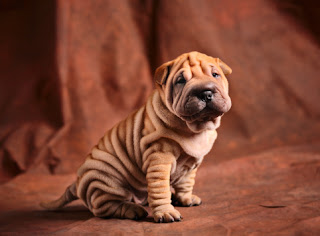
bear coat shar pei
The History of Shar pei
Dogs like the Bear coat Shar Pei breed have existed in southern China for centuries, perhaps as far back as the Han Dynasty around 200 B.C. Statuary from that period showing a dog similar to the Shar pei has been found by archaeologists. Later evidence includes a 13 th-century document that refers to a wrinkled dog.
Early Shar Pei for sale were all-around farm and working dogs. They guarded property and livestock, hunted game, and herded flocks. The Shar pei was a household guardian in another way, too. His purplish tongue, shared with only one other breed, the Chow Chow, and his wrinkly skin were thought to frighten away evil spirits. In addition to being working dogs, Shar Pei were also popular fighting dogs. Their loose skin and rough coat made it difficult for the other dog to grab onto them.
Life has always been harsh in China, but for the Shar pei it became downright dangerous after the Communist takeover early in the 20 th century. In the People's Republic of China, dogs were a symbol of a decadent past and they were practically eliminated in the 1950s. Only a few remained in rural areas, as well as in Hong Kong (still under British rule at the time) and Taiwan, plus a few that had been exported to the United States in 1966.
In 1973, a Hong Kong breeder named Matgo Law appealed to Western dog fanciers to help him save the breed, which was nearing extinction. The unusual wrinkled dogs elicited an enthusiastic interest from Americans and quickly became “the” dog to have. Shar pei were fully recognized by the American Kennel Club in 1992. After that first burst of popularity, they have achieved a moderate level of interest, currently ranked at 50 th, down from 37 th a decade ago.
.........Shar pei Temperament and Personality
The Shar pei is a bit of a snob. He is naturally reserved around people he doesn’t know and remains aloof once they are introduced. Extensive socialization at an early age is necessary to prevent him from becoming too territorial or aggressive. Only family members receive the overwhelming devotion of this independent, alert and intelligent dog who watches the world go by in a calm and dignified manner.
A Shar pei is quiet in the house. He is a remarkably good watchdog and rarely barks unless in play. If you hear him, it would behoove you to go see what has caught his attention. A short, brisk walk satisfies his exercise needs.
This is a strong, confident dog who learns quickly, so don’t put off training. The Shar pei is independent and strong willed. Be firm but never harsh or physical with him. Teach him early on to accept grooming procedures such as nail trimming, ear cleaning and teeth brushing. You never want your Shar pei to learn that he can physically intimidate you into stopping those procedures.
Like most dogs, Shar pei dislike having their feet touched and dislike having their nails trimmed. That applies to other procedures, too.
The Shar pei is a guard dog who has hunted and fought other dogs. Most Shar pei don't care for the company of other dogs, and they are easily aroused to aggression. A securely fenced yard will prevent him from engaging in conflicts with other dogs or trying to expand his territory to include the whole block.
Start training your puppy the day you bring him home. Even at eight weeks old, he is capable of soaking up everything you can teach him. Don’t wait until he is 6 months old to begin training or you will have a more headstrong dog to deal with. If possible, get him into puppy kindergarten class by the time he is 10 to 12 weeks old, and socialize, socialize, socialize. However, be aware that many puppy training classes require certain vaccines (like kennel cough) to be up to date, and many veterinarians recommend limited exposure to other dogs and public places until puppy vaccines (including rabies, distemper and parvovirus) have been completed. In lieu of formal training, you can begin training your puppy at home and socializing him among family and friends until puppy vaccines are completed.
.........HEALTH
Hip Dysplasia (Preliminary), Hip Dysplasia (Definitive)
Hip testing reduces the chance of passing down hip dysplasia, which is primarily found in large breed dogs and can cause hip pain and the eventual loss of the function of the hip joint.
Elbow Dysplasia (Preliminary), Elbow Dysplasia (Definitive)
Elbow testing reduces the chance of passing down elbow dysplasia, which is primarily found in large breed dogs and can cause arthritis in the elbow joint and front leg lameness.
Eye Certification (CAER, registered with OFA)
Eye testing reduces the chance of passing down a wide range of hereditary eye illnesses including retinal dysplasia, lens luxation, and glaucoma, which can cause impared vision or blindness.
Cardiac Evaluation
Heart testing reduces the chance of passing down congenital heart disease, which can cause a range of symptoms ranging from trouble exercising to heart failure.
Patellar Luxation (registered with OFA)
Knee testing reduces the chance of passing down Patellar Luxation, which results in the kneecap becoming displaced or dislocated and can cause mild to severe joint pain.
Thyroid (Autoimmune Thyroiditis, registered with OFA)
Show Less
Thyroid testing reduces the chance of passing down hypothyroidism, which can cause a variety of symptoms including obesity, hair loss, skin problems and mild to severe pain.
DNA Disease Panel, Full Embark Panel, Wisdom Panel, Shar-Pei Autoinflammatory Disease, Primary Open Angle Glaucoma and Primary Lens Luxation (POAG/PLL), Shar-Pei Type
Genetic testing reduces the chance of passing down a wide variety of hereditary diseases of differing prevalence and severity such as Progressive Retinal Atrophy (an eye disease) and Von Willebrand's Disease (a blood disease).
Comments
Post a Comment